Pages

Wednesday, July 11, 2018

Learning at the Franklin

Yesterday I had the amazing opportunity, thanks to our local intermediate unit and a STEM grant they received, to attend a professional development session at The Franklin Institute in Philadelphia. The official title of the session was Demystifying Maker Spaces at the Franklin Institute, and I was completely stoked to have the opportunity to learn at the museum since I had never actually been there.

I went in having a lot of preconceived ideas about what the day would be about, and the biggest one was that we would be taking a look at how to set up a special space, the materials we need, and the things that the kids would create while they were there. I was also looking forward to seeing how the instructors connected this idea of a makers space in a museum with something that I could actually do back at school.

Boy was I wrong.

The day ended up being a big affirmation of what I've already been doing in our classroom during our clinic time, but I've been calling it Genius Hour. Imagine my surprise when the instructor even started the hands on part of our learning exactly the same way I start clinic with my kids: by showing Caine's Arcade! After watching the video and brainstorming everything we knew about different type of arcade games, we were split into groups. Each group was assigned to a different part of the museum, and our mission was to use that section of the museum to inspire our own arcade game. My group was assigned to Space Command, and we were off to see what we could find. We ended up with Solar System Shootout, and it was a lot of fun to create the project.

Each planet was worth a different amount of points based on its size

Once again, while getting the affirmation that I was on the right track was great, I wondered what new learning I would end up getting that I didn't bring with me on the bus. But as I reflect back on the day I realize that the experience gave me a lot to think about.

First, I was reminded once again that how you group kids (or adults) is extremely important. We were assigned to groups randomly with a dot on our name tags. While my group of 3 worked well together, I don't think we were comfortable enough with each other to have challenging discussions. I also was a little disappointed that my teammates weren't as eager to explore the museum after we finished in our assigned section as I was. Once again, I realized the importance of establishing a strong community in my classroom before jumping into projects like this.

Second, I learned how to be a more effective facilitator for my kids. This past year I played more of a hands off role, observing and helping when kids asked for help. Now I know that in order for the kids to be hands on and minds on, I need to be more active by following four steps:

  • Asking opening ended questions: Why did you do that? What were you thinking? Why do you think that happened? Would you change anything? What challenges did you experience? What were your successes? 
  • Encourage critical thinking - asking the open ended questions forces the kids to think critically and allows me to see the learning they need or they are getting
  • Cultivate a rich dialogue - giving individuals or groups the opportunity to share their ideas WHILE they are working, instead of just when they are finished, allows for kids to practice discussions, making suggestions, and accepting constructive criticism
  • Make connections - showing kids how their actions are like the work of real scientists or other workers in the real world
While I was thrilled to learn how to be a better facilitator, there was one other quote that really stuck with me. 

A makers space isn't so much a place or a thing that you make. It's a mindset that you have.

Let that sink in a second. Learning can be informal. The kids can direct the learning. The process is more important than the product. Reflection is important. There are multiple ways to solve a problem. It's okay to fail. We can learn a lot by listening to each other. 

We've been so worried about having a special room and finding the right materials, but really, it's not about that at all. The key to a makers space is all about having a different mindset. And thanks to my learning, I'm excited to continue to grow this mindset in my classroom.

Sunday, July 8, 2018

Too Much Time on My Hands

If you're not already singing this, then clearly you aren't nearly as old as I am. Or maybe it's just that you haven't heard the magic of Styx. Either way, let's start off with a little music to get your toes tapping!


You can thank me later for that ear worm.

But seriously, having a lot of time on your hands can be a blessing or a curse. For me it's been a blessing because I'm doing a ton of reading and learning since the whole broken foot thing has the rest of my activities relatively limited. I have a little notebook where I've been taking notes on all of the great ideas I've learned in books, from blog posts, and from Twitter. My mind is racing with all of these ideas and resources and how they might look in my classroom this coming year.

But all of that learning can also be a curse. Because let's be honest. Once I learn something and get excited about it, then of COURSE I need implement it in my classroom. Anything else would be a waste of all of that wonderful learning. But today, I had a little aha moment as I was thinking about all of the things that I already have written in my notebook and all of the ideas racing around in my mind.

I can't do it all.
If I try to do it all, I am going to feel like I'm not doing anything well.
If I try to do it all, I'm going to feel like I'm failing.
If I try to do it all, I'm going to give up.

I'm not sure if any of you are like me, but this is a pretty big realization. I tend to push myself -- okay, I push myself, and I'm super hard on myself when I don't think I'm doing things the way I believe they should be done. So putting the brakes on today was a pretty huge step for me, and now I need to think about my new learnings through a different lens. I'm thinking about what exactly will be happening this year:

1. I know that I am going to have a cart of Chromebooks for my classroom to begin piloting our 1:1 program.
2. I know that I started dabbling in the station rotation model at the end of last school year, and I loved how it felt. 
3. I know that I am expected to start using Schoology in preparation to teach my colleagues how to use it as we move to a 1:1 school.

Just those three things are a monumental task for one school year because within the idea of the 1:1 program and the personalized learning that comes with the station rotation model, there are lots of activities to adjust and technology to learn. Rather than continuing to pile on the new learnings and new ideas, I really need to focus on being successful (or failing forward) with these three things so that I can reach my goal for student success and personalized learning and help my colleagues feel confident and successful as they begin to implement personalized learning in their classrooms.

I hope if you have too much time on your hands this summer that you learn many wonderful things, but you remember that you don't have to do all of them in your classroom. Being really successful with one or two meaningful changes can make a much bigger impact than trying to do a lot of things halfway.

Tuesday, July 3, 2018

Focus On the Positives

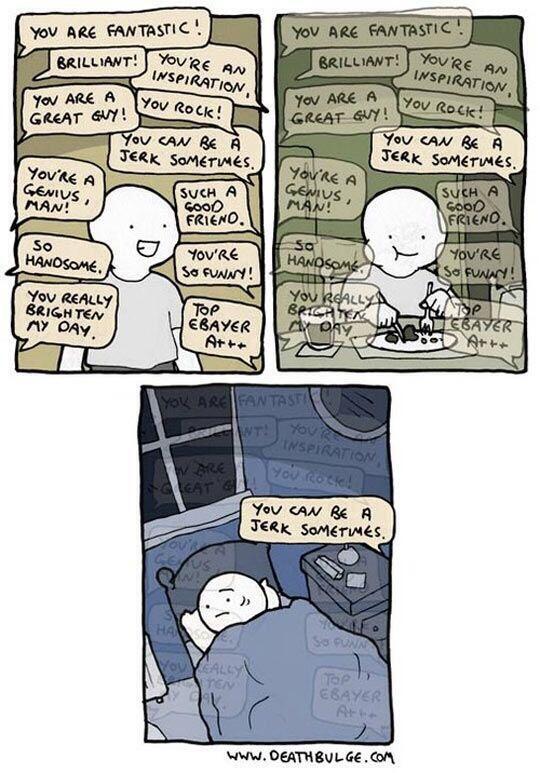
Have you ever noticed that, for some reason, we focus way more on the negatives than the positives? This is an image that I've seen a few different times, and it always impacts me the same way.


That's me. I've been there. Often.

We focus on the traffic lights that turn red instead as we approach them instead of cheering for the lights that turn green or are green during our trip.

We grumble about the long line at the grocery store, but we don't cheer when the cashier opens their register and asks if they can help us.

We become impatient when we have to wait on hold, but we don't cheer when somebody answers our call almost immediately.

We get annoyed when the dogs stay out and putz around when we're in a hurry, but we don't cheer them on as much as we should when they come right away when we call.

We are sad when one person forgets our birthday, even when 175 others take the time out of their day to acknowledge us.

We make our kids spend extra time on things they don't do well at, like reading, instead of letting them participate in activities like band or orchestra where they excel.

At some point we need to start cheering for the good things, no matter how small.

At some point we need to be thankful for all that we have that is good.

At some point we need to focus on kids' (and adults') strengths and not on their weaknesses.

At some point we need to focus on the positives because those are all of the good things that make life special.

Thursday, June 28, 2018

Two Steps Forward

I've been thinking a lot about how I want to continue to transform my classroom this year based upon the learning I'm doing this summer. After hearing Bob Dillon speak at our closing session of the school year, I was motivated to change my classroom space, something that I had been pondering for a few months. The book, Blended, has helped me set a goal, which I'm still refining, and determine that a combination of the station rotation model and the flex model would be the best blended learning styles to help me and my students reach our goal.

Now I'm on the to the book The Eduprotocol Field Guide by Marlena Hebern and Jon Corippo. This book describes various lesson frames that you can use to teach kids content and skills throughout the year. While I'm not anywhere near finishing the book, I especially appreciate their chapters on Smart Starts: using the first few weeks of school to establish culture and routines as opposed to jumping right into the curriculum. While some of my colleagues disagree with me, this idea of starting smart is something that I have been doing for a while now, and it was a nice affirmation to see it discussed in an in depth manner in this book.

In addition to the affirmation, I've already learned something that I can use to help me transform my classroom, and I feel should have been a no brainer. In addition to the Smart Starts they also recommend using that time at the beginning of the year to do a Tech Boot camp. Front load the year with an introduction to all of the technology you'll be using in your classroom so that they kids have the background they need to explore, be creative, and be successful throughout the year. Seriously. Why did I not think of this?

Finally, like any good book, it's also making me question things. The first quote that caught my eye was, "Parallel learning is no longer the appropriate model for classrooms." And then a little while later I read, "... this natural creativity has been steadily decreasing since 1990, with the most significant losses by third grade despite increases in IQ." Those two quotes made me think back to a school visit our group did to the Lampeter Strasburg School District. This visit was the key to help me change the instruction in my classroom this year, and something one of our hosts said really stuck with me. As we were touring the middle school our one host said something along the lines of, "We don't want the kids to take a step backwards with their learning experiences; we want them to keep moving forward." Now, our guide was speaking in terms of 1:1 opportunities and explaining when they went up from middle school and then back down to the elementary school. They didn't want the kids to have the opportunities for a blended learning experiences but then go back to a traditional learning experience. But really, this statement could apply to anything from changing your classroom space, offering students more choice, giving them opportunities to fix mistakes, and giving students flexibility in how they move through the content.

As I read the quotes in the book, I thought about the kids who were in my class last year, the upcoming school year, and my new students. Last year's kids had the opportunity for a second take on their assessments because we were learning the value of mistakes. What if they don't have that same opportunity this year? This year's students will have the opportunity to learn in a blended classroom when they are with me, but they will be in a mostly traditional setting in their other class. They will likely also be in a traditional setting in 5th grade. How will that impact their learning? I am spending a lot of time focusing on the 4Cs and having a growth mindset rather than test taking skills and passing the PSSAs. Will this carry over as successful experiences for my students, or will the skills not transfer and put them behind the learning curve?

While I am excited to transform my classroom, and while I have much respect for all of my coworkers as caring professionals, I can't help but wonder if the haphazard way we are implementing things at our school will cause our students to move two steps forward and then one step back with every transition they make.

Tuesday, June 19, 2018

Thinking about Mental Health

Each summer my district provides online professional development opportunities. Taking these courses results in a trade day, or a day off during the school year. I always enjoy the opportunities that we are provided, and this year I selected a course on blended learning and a course on mental health issues. Along with growth mindset concepts, understanding the mental health issues my students are facing is very important to me, so I was very interested to see what I would learn through this course.

The course focused on depression, anxiety, eating disorders, psychosis, and conduct disorders. There were some great videos incorporated into the course, and while I enjoyed all of them (some of them were videos that I had already watched previously on my own), I really enjoyed one that I ended up with by accident. It was one of those "since you watched this video, here's another one for you to check out," videos that starts playing automatically when the first one ends. It's called Everything you Thought you Knew about Addiction is Wrong by Johann Hari, and if you have a few minutes to spare, I would definitely check it out. It gave me a lot to think about in terms of the environment we are creating for all of our students who make mistakes.

I think the simple fact is that we are teachers, we're not medical professionals. The best that we can hope to do is provide a connected, caring, safe environment for our students so they are okay with making mistakes and okay with being themselves. We need to speak up when we believe something is wrong, and we need to advocate for our kids who are struggling in any capacity. And we need to keep advocating until we are blue in the face.

The psychosis section of this course really impacted me because it reminded me of a student I had many years ago. I had the opportunity to have this young man for two years as part of a 3rd / 4th grade looping class and then for a 3rd year as part of a 4th / 5th grade multi-age program. This boy was what I liked to call a squirrel. Always darting from here to there, always finding something different to think about or do, and he kept me on my toes. I had the opportunity to see him grow the first two years, and while he needed constant reminders the potential for success was always there. During those first two years, he father suffered from, and eventually passed away from, a difficult and debilitating liver disease. After losing his father I worried about it, but as is the norm, I sent him off for summer vacation and hoped for the best.

When this young man came back, he was a different boy. He repeatedly shared stories about the bigger, bad kids in the neighborhood and the really bad stuff that they did. Unfortunately, I never was able to get the details about what that "really bad stuff" was, but I passed his comments on to our guidance counselor in the hopes that she might be able to find out something that I couldn't. It was around this same time that he started acting out and stealing things. When I became more vocal with my concerns, I was told that he had always been that way, I was just too nice and hadn't been strict enough. And clearly he had always been stealing stuff, but I had just never caught him doing it when he was in my room all the time. I knew this young man had changed, and I knew he needed help. But the louder I squawked the less people listened. And so began a long line of disciplinary problems and consequences issued.

This young man went on to have significantly more serious behavior problems in middle school. I don't believe he ever ended up graduating. And a few years ago I got the sad news that he had committed suicide while incarcerated in our local prison.

When we talk about mental health issues and getting students the support that they need, he is my failure. I don't know what else I could have done, but what happened to this young man will haunt me forever. As we try to educate ourselves about the mental health issues that are affecting our kids today, I can only hope that we will figure out the answer to helping our kids before it's too late.

Monday, June 11, 2018

Nothing Better to Do

After three short days I'm already finding that being in a walking boot really stinks. A mysterious stress fracture has me confined to this torture device for at least the next three weeks, and nothing is easy. Everything that I have to do takes longer, and everything that I was excited to start doing once school was out is out of the question.

Since I have "nothing better to do" with my time, why not look at school stuff?

Isn't that how we look at a lot of things? Since I have nothing better to do why not do this task instead of, YES! I finally have the time to sit and think about this! The fact is that I had such a great year, I'm actually energized and excited to keep learning. (Go ahead, insert the nerd emoji here. I wear it proudly!) While I wanted absolutely nothing to do with school last summer and just needed a break from everything remotely related to school, this year is different. So, since my hiking, walking the dog, going to the gym, and kayaking time have all been reduced to zero, it makes sense that I would follow my other passion: learning!

During the year our school's 1:1 implementation team started reading the book Blended: Using Disruptive Innovation to Improve Schools by Horn and Staker. We read the first two chapters together as a group and used them as a jumping point for our visitations and 1:1 implementation work. But now that I have so much time on my hands, I figured I'd keep going and see what else I can learn.

I've already settled on the fact that we are not going to be disruptive innovators. We had a great opportunity to do just that at our school in the upcoming year and passed up that opportunity. So that got me thinking, "Why exactly is my school going 1:1 in the next few years?" Besides the fact that it's the latest thing to do. Besides the fact that we all now how Schoology accounts. Besides the fact that it's what everybody is doing. Why are we making this move? I got thinking about this because Chapter 3 in the book talks all about a rallying cry, establishing goals, and looking at the different types of innovation to meet those goals.

As I thought about my own classroom and what my own goal for next year might be, I came up with this first draft:

My goal is to use the hybrid rotational model so that all of my students will show growth during each math unit, on the 4th grade PSSAs, and on their benchmark assessments. The students and I will be responsible for this growth by the end of the year.

I know that's pretty general, but like I said, it's a first draft. And it's what really got me thinking about this whole 1:1 thing because I was able to accomplish this goal this year without 1:1 technology. So obviously there's my first problem: I've already met this goal. Why should it be my goal again this year? Well, the key piece that I added is "the students and I will be responsible." I really want to help my students start becoming the owners of their own learning. I know my kiddos are only 9 or 10, so they aren't going to be able to do everything on their own, and they have a lot to learn. But I want to continue what I achieved this year with growth mindset, making mistakes, and taking charge of their own learning and help my next group of kids become even more successful at following their passions and loving learning.

So now that I have my first draft, I need to start thinking about how I want to up the ante. Is this really the goal I want for my classroom? Will 1:1 technology really help my students become more responsible for their learning? What do I have to do differently to help my kids continue to show growth but also become more responsible for their learning? And what really is our goal for 1:1 technology? 

Hopefully I will be able to figure out the answers to at least some of these questions this summer. And if not, I will at least have fun learning!

Saturday, June 9, 2018

Year 20 in the Books

This year was exactly what I needed. Year 19 was hard, really hard, and it made me wonder if I was really supposed to be a teacher any more. Year 20 was the big, giant hug that said, "Yup, this is what you are supposed to be doing."

While I certainly didn't have the challenges I experienced last year, there were definitely still challenges of all shapes and sizes. I was also very nervous because I was teaching a very different group of students than I have ever (and when I say ever, I mean all 20 years ever) taught before. I didn't want to let down those people who asked me to take on that challenge. I was also out many days this year for professional learning, and everybody knows that being out can throw the kiddos and the teachers for a loop.

So what was it about this year that made it so much better? While I'm still reflecting, I have some thoughts on this.


  1. We embraced the ideas of having a growth mindset. We really learned about our brains (to the point that one of my kids said, "Well, my amygdala has me feeling really frustrated so I need to take a little break!"), we learned about how we learn, and we worked really hard to find and fix mistakes. It's okay to say it's okay to make mistakes, but if you don't persevere to fix those mistakes then you are missing the point.
  2. I gave the kids more control of the classroom. Yes, some of the desk arrangements they came up with made me twitchy, but the arrangements were theirs. I stepped back and let them be in charge in designing our room, picking their seats, and sometimes even choosing how they would show me their learning. It felt really good, and they rose to the challenge, so I want to continue to grow in this area next year.
  3. Things bothered me less. I have been on a personal journey to learn more about mindfulness, health, and gratitude. My own personal learning and growth helped me focus on what was really important at school and let the other stuff go. It's also amazing how happiness at home helps you be more productive at school.
  4. We were more creative. We designed parks, we built tiny houses, and we made roller coasters. And it wasn't because there was "extra time at the end of the year" or because they were fast finishers. It was because these tasks fit our units and gave the kids meaningful opportunities to collaborate, think critically, and be creative. I did notice that during these opportunities many of my friends struggled when things got hard. They LOVED the projects until they got hard. So that is an area we can continue to work on next year.
  5. My professional learning grew and grew. As part of our school's 1:1 planning team, I had the opportunity to take part in a training session and then work with a larger group to see how we could implement what we are learning at our school. Having the opportunity to think differently about learning really opened my eyes and help me grow this year, and I'm excited for the opportunities I will have next year.
  6. The kids.
I could go on and on. There's a lot to be thankful for, happy about, and excited about in regards to this year. I am thankful that, even after 20 years, I cried a little after I said goodbye to my kids. I was a little sad when I left my classroom yesterday. And I'm already excited for next year's possibilities.

Yup. This is what I'm supposed to be doing.